1
Born by the sea
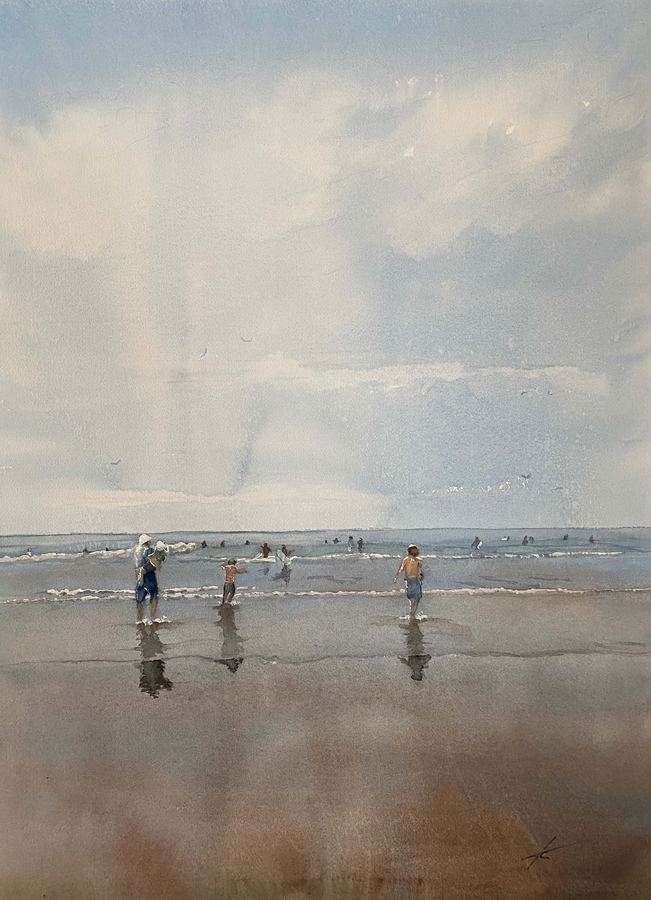
I was born in the south of England, and its coast has never quite left the work.
Woolacombe beach, rock pools, a grandmother and a child crab-fishing, a bucket and spade: they still come back in the paintings, usually a little warmer than everything else.
2
A valley in Switzerland
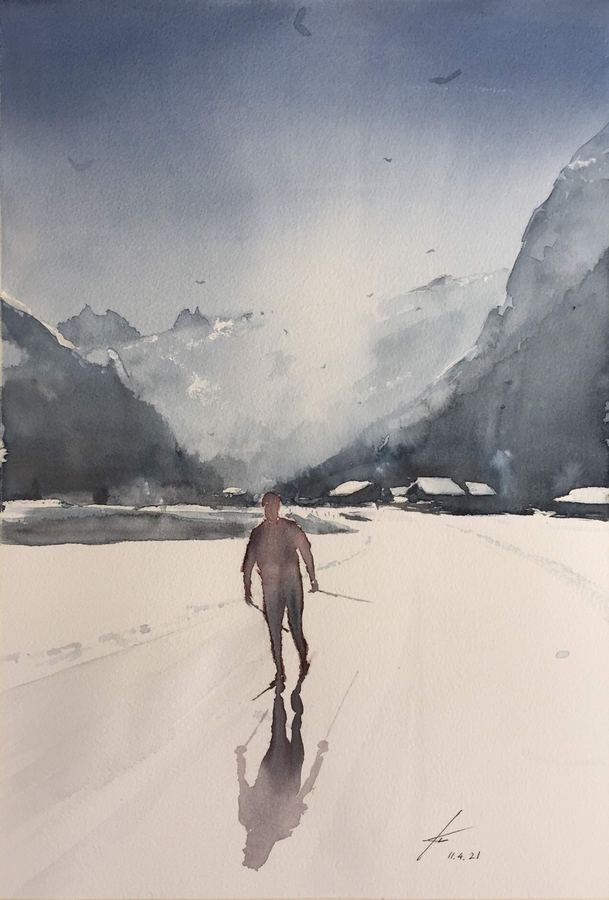
Now I live in Engelberg, deep in Central Switzerland, with Titlis above the village. It has become home: the cross-country tracks, the Fellenrüti, Beat’s Hof, the Langlöifer out on the tracks.
The village gave me its words as well as its views, which is why some of the titles are in Swiss German.
How a painting happens
-
Sketch
A few lines on the spot. Where the light comes from, where the people are.
-
Photograph
Not to copy. Just to remember what the snow did that morning.
-
Remember
Time does the editing. Detail falls away. What’s left is the light.
-
Paint
Sky wet into wet, quickly. Hard edges last. Leave the white alone.
3
Edges that don’t sit still
I am less interested in exactly how something looked than in what remains after the light, the weather and the movement have already changed.
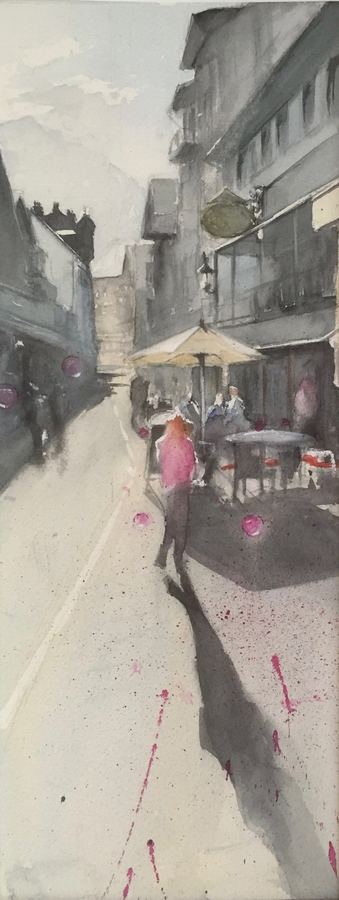
So the forms are reduced and the edges stay loose. Figures are a posture, a red coat, a shadow on the Dorfstrasse: people held in a shared space, defined by how they stand rather than who they are.
4
And then, charcoal
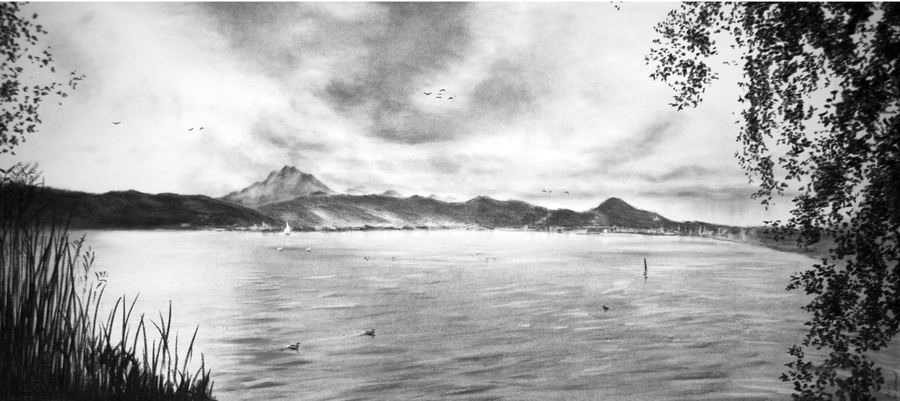
When a subject needs weight rather than colour I put the brushes away. Charcoal is slow and physical: stone, cloud, a lake seen through the trees, built up from pressure and patience.
In September 2025 I opened my studio for Engelberg’s first Open Culture Day. My paintings are in private collections, and the whole archive is online.